Friday, 15 March 2013

Barnacle Bill


1957 - Dir: Charles Friend - 1 hr 23 minutes
Shown at The FeckenOdeon on 23rd March, 2013

By the time "Barnacle" Bill was released, Ealing Studios had already sold off its physical studio (to the BBC) and was about to shut down altogether. After so many great films in the late 1940s and early 1950s, Ealing couldn’t adapt to changing times. But it went out doing what it did best and this is a typical Ealing film. There’s a group of very British, eccentric characters in an outlandish situation and they take it all with superhuman control. It’s all been done before, and done before by Ealing, but that doesn’t mean it isn’t a lot of fun. Alec Guinness puts in another top notch performance - perhaps with a bit more gusto than normal. The supporting cast is excellent (when has an Ealing film ever had a weak supporting cast?), the characters, particularly Ambrose, are engaging, and the story presents plenty of opportunity for witty banter and comfortable chuckles. It might not be the most hilarious side splitter - but it does give us a final fond look at a world before every movie had to be a blockbuster. It was titled "All at Sea" in the USA.... because the studios feared it would be associated with a lewd seafarers’ song entitled "Bollocky Bill The Sailor".

Sunday, 3 March 2013

Red Dog

2011 - Dir: Kriv Stenders
Shown at The FeckenOdeon on 8th March 2013
Most Australians were familiar with the legend of Red Dog - a stray Kelpie cross who wound up in the newly established mining town of Dampier, western Australia, sometime in the early 70s. He became such a friend to the locals that a statue of him now greets all visitors to Dampier. It was a sighting of this statue, the town's sole piece of public art, that led Louis de Bernières to turn the dog’s tale into a book upon which this film is based. How much of the resulting movie is embellishment is up for debate. But in the tradition of films such as semi-fictionalised The Castle (shown at the FeckenOdeon in 2008), it's a hilarious and occasionally sad look at a side of Australian life whose essence is rarely captured with such affectionate accuracy. The film gathers incidents from every dog movie you ever saw, from Rescued by Rover and Rin Tin Tin to Greyfriars Bobby and Lassie Come Home.
The film’s two legged star Josh Lucas (who is American) did a bit of research into the truth of the legend by meeting some of the older labourers who knew the real Red Dog, and hearing stories about his presence in their community. "I kept finding these people that would show me a photograph of Red Dog with a cigarette in his mouth and a beer in his paw, passed out asleep in their beds ... They’d say, ‘You’d be pissed off because you’d come home and Red Dog would be in your bed.’ I asked, ‘Well, why didn’t you just kick him out?’ - ‘Oh, no. You’d never kick Red Dog out.” came the reply. The setting also contributed to Mr Lucas' interest in the project. "they showed these images of the place where they were going to film. Out in way remote Australia, where the movie takes place. I’ve known so few people who have ever been to this place out in the middle of nowhere. It looked so beautiful. And knowing that no movie had ever been made there before, and that they were going to tackle this difficult land. Because the land, really, is forbidden. You only go there if you’re part of the mines. There’s no water. The land is literally made of metal."
The real Red Dog was an Australian Kelpie, possibly crossed with an Australian Cattle Dog, and is believed to have been born in the town of Paraburdoo, Western Australia in 1971, and died on November 21, 1979. Sadly Koko, who played the Red Dog in the film died last December. The film had been so successful in its native land that the country went into impromptu mourning. Koko had earlier won the American Golden Collar Award for “Best Dog in a Foreign Film”
The movie received considerable support from the controversial Rio Tinto mining company on whose land much of the film was shot, and they were no doubt hoping to gain some friendly public relations warmth from the Rio Rin Tin Tinto effect (pun courtesy of Philip French!).

Saturday, 2 February 2013

UNTOUCHABLE

(Intouchables)
2011 - Dir: Olivier Nakache and Éric Toledano
Shown at The FeckenOdeon on 8th February, 2013

"From the people that brought you The Artist," cries the poster for the French comedy Untouchable. The tagline is a bold and obvious statement of the film's intent to recreate the critical success of the winner of 2012's best picture Oscar. In financial terms, though, Untouchable has already surpassed it. Not your run-of-the-mill laugh-filled romp, it has nevertheless taken an incredible $364 million (£225 million) worldwide. The Artist, in contrast, earned a relatively meagre $133m (£82m). However, both films share more than a few things in common other than the obvious French connection. First of all, neither was a particularly easy sell to potential investors - one of whom asked the film-makers if the main character "could walk a little at the end". Co-director Eric Toledano says: "Even with friends at dinner, when they asked what the subject was and we'd try to pitch it, you would see their faces drop. I said, 'Let's stop the pitching'." Instead, he and co-director Olivier Nakache relied on the fact that they already had three relatively successful films under their belt. So they decided to let the tale - based on the true story of French aristocrat Philippe Pozzo di Borgo and his carer Abdel Sellou - speak for itself.
 

The film’s international success was assured when Hollywood distributor Harvey Weinstein came on board. It was he who spotted the potential of The Artist and it is Mr Weinstein who put his financial weight behind such successes as "My Week with Marilyn", "The King’s Speech" and "The Concert" - all shown here recently. Mr Weinstein’s hard hitting attitude came in handy when the film was seized upon by French right-wing politician Jean-Marie le Pen, who accused it of being an example of France's move toward ethnic diversity. In the film, wealthy Philippe's carer Driss, played by French comedy actor Omar Sy, is a Senegalese immigrant. The real life Abdel Sellou is Algerian. "France is like this handicapped person stuck in this wheelchair," Le Pen told a French TV network. "It would be a disaster if France would find itself in the same situation as this poor handicapped person." Weinstein pulled no punches and accused Le Pen of being "a repulsive bigot"... Mr Weinstein was immediately awarded the Legion d’Honeur and the film’s box office soared. Unfortunately Mr Weinstein is considering remaking the film in America - presumably because the Americans can’t read subtitles. Colin Firth is tipped for the wheelchair role.

Philippe Pozzo de Borgo is still living in Morocco and has written his own account of the 10 years that Abdel Sellou cared for him. "A Second Wind" is available in paperback and as a Kindle download from Amazon.co.uk (enter the site via the link on The FeckenOdeon website). Abdel is now married with 3 children and runs a poultry farm in Algeria.

Monday, 7 January 2013

MY WEEK WITH MARILYN


2012 - Dir: Simon Curtis - 1 hours 35 minutes
Shown at The FeckenOdeon on 26th January, 2013


The year 1956 was a pivotal one in British history. The Suez crisis rocked the nation's standing in the world, and Anthony Eden's authority as prime minister began unravelling. In the theatre, John Osborne's Look Back in Anger premiered at the Royal Court, effectively sweeping away generations of genteel, escapist British plays. Against this backdrop, Colin Clark, a young man of 23, talked himself into a lowly job with Laurence Olivier's film production company. Clark was hired as third assistant director on the film The Prince and the Showgirl, shot at Pinewood Studios and starring Olivier, leading light of the conservative British acting establishment, and Marilyn Monroe, then the hottest star in Hollywood. Young Mr Clark had the presence of mind to write a diary about his experiences on the film, and chronicle a monumental clash of egos and cultures. Clark, who went on to make more than 100 arts documentaries and who died in 2002, published his diaries, The Prince, the Showgirl and Me, to great acclaim in 1995.


Monroe took a shine to the confident yet innocent Clark, and at one point whisked him away from the set to spend a week virtually alone with her, an escape from the pressures she felt Olivier was imposing on her. Together they enjoyed what might be called a chaste romance, though the week in question is omitted from the diary. But in 2000, following the success of the first book, Clark published My Week with Marilyn, an account of their nine days together, an experience, Clark said, 'so dramatic and extraordinary that it was impossible to include it in my daily chatterings'. It is this later book that forms the basis for this film. Diary writing runs in Mr. Clark’s family - his brother was the flamboyant and indiscreet MP Alan Clark. His father was the renowned art historian Kenneth Clark, best known as the writer and presenter of the television series Civilisation.

Monday, 10 December 2012

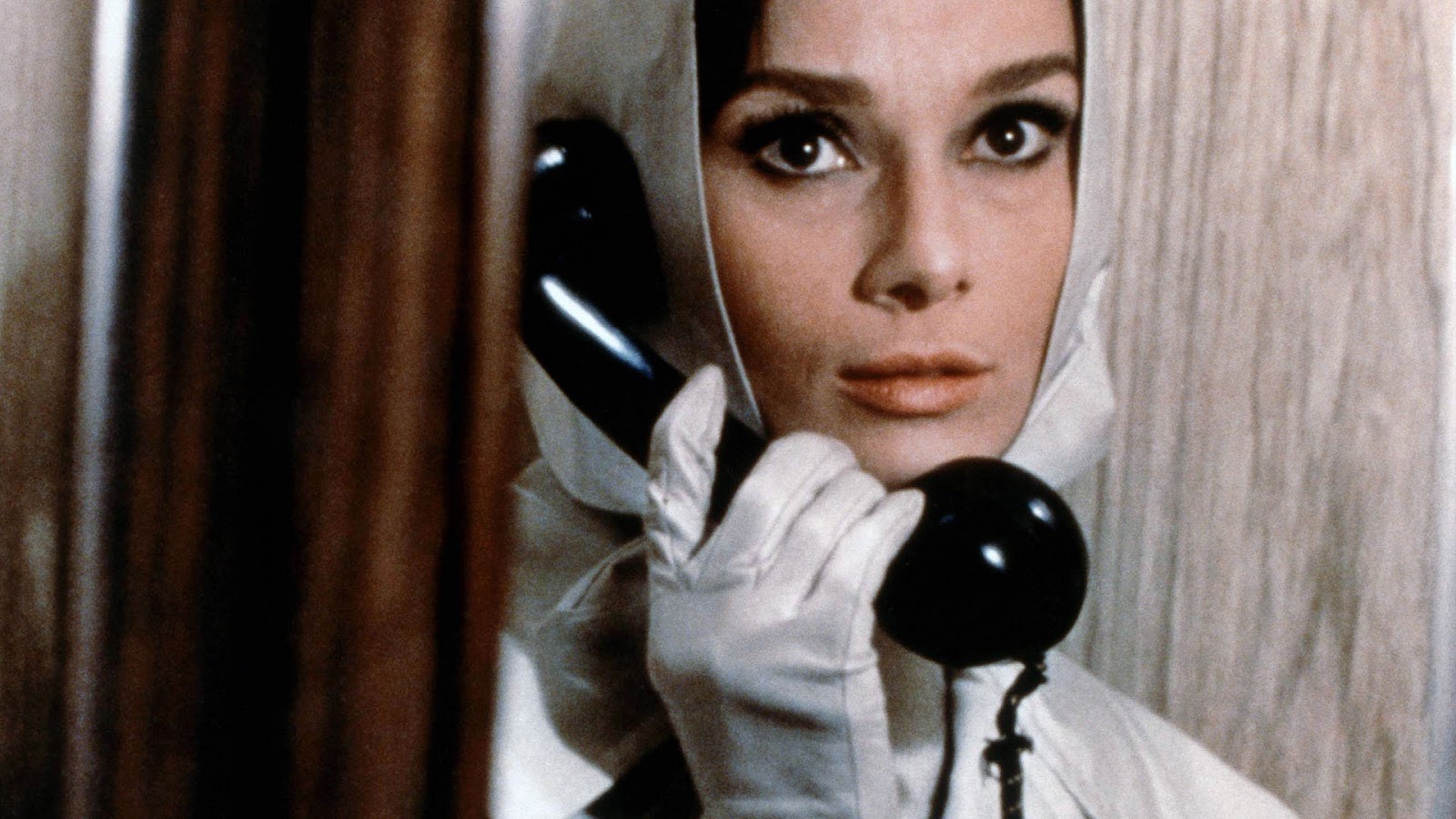
Charade


1963 - Dir.: Stanley Donen - 1 hr 48 mins
Shown at The FeckenOdeon on 29th December, 2012
 
Charade opened in the USA just in time for Christmas 1963. This glossy and slick comedy thriller didn’t fill the New York Times with festive cheer: "Seekers of Christmas entertainment, might do well to think twice about "Charade". This romantic comedy melodrama, in which Audrey Hepburn and Cary Grant skitter and scoot around Paris as participants in a cheating-cheaters chase, has so many grisly touches in it and runs to violence so many times the people bringing their youngsters to see the annual Nativity pageant and the Christmas stage show may blanch in horror when it comes on." You have been warned!
Sometimes described as "the best Hitchcock film not directed by Alfred Hitchcock" this film is the work of jobbing director Stanley Donen who started his film life as a dancer. He became friendly with Gene Kelly who gave him the chance to direct musical sequences. He was so good at it that he soon found himself sharing the responsibility for big budget musicals like On the Town (1949) and then Singin’ in the Rain (1952). On his own he directed Royal Wedding (1951), Seven Brides for Seven Brothers (1954), Funny Face (1957) and Damn Yankees (1958). When musicals were no longer in fashion he turned to suspense and comedy - which is exactly what he dishes up in "Charade". He was granted an honorary Academy Award "in appreciation of a body of work marked by grace, elegance, wit and visual innovation." In his acceptance speech he declared that one of the secrets to being a great director is "You show up - and stay the hell out of the way. But you gotta show up or else you can’t take the credit".
The story of "Charade" started when screenwriters Peter Stone and Marc Behm offered a script called "The Unsuspecting Wife" to the Hollywood studios who turned it down flat. Stone then turned it into a novel, re-titled Charade, which found a publisher and was also serialized in Redbook magazine, as many novels were at the time. In Redbook it caught the attention of the same Hollywood bosses who had passed on it earlier….
 
When Audrey met Cary…This is Cary Grant’s one and only appearance with Audrey Hepburn and his last playing his stock urbane character - he was wise enough to realise that his age (59) was beginning to show. After a couple of small part appearances he retired from the screen in 1966 and devoted his life to his family… and a lucrative directorship of Fabergé. He died in 1986.
Audrey Hepburn was born on May 4, 1929 in Brussels, Belgium. Her father was a wealthy English banker and her mother a Dutch baroness. When "Charade" was made she was enjoying the success of "Breakfast at Tiffany’s" and the glamour of "My Fair Lady" was just a year ahead. While Cary Grant was effectively ending his career honourably, Audrey was on the crest of the wave.
Unlike our supporting film, "Charade" has received the full works - a High Definition digital restoration that gives the film a fresh, glossy, sharp, sparkling look. Like many of the best conversions from film to digital, this one almost looks better than the original.

The Plank


1967 - Dir: Eric Sykes - 51 mins
Shown at The FeckenOdeon on 29th December, 2012


This showing was planned last April. Eric Sykes died in July aged 89. We could claim that this is our tribute to one of the greatest screen comedy actors Britain has ever produced - but we’d probably be more honest saying that over the past 12 years we’ve had more requests for this film than any other (apart from Lawrence of Arabia) - which is a tribute in itself! Sykes dreamed this inspired comedy up, cast it, squeezed money out of the stones of Wardour Street, scripted it as he directed it and did everything but the most mundane technical tasks himself. It’s quite simply one man’s masterpiece - and speaks volumes more than any epitaph.
It’s sad and rather shameful that The Plank has been absent from the big screen since the 1970s. The Rank Organisation, who inherited it after London Films went bust, seemed to be ashamed of it and no new prints were made after the original 1967 release. Television showings were sporadic and were eclipsed by a shorter 1979 remake by Thames Television - not as funny but cheaper to repeat. Even in the digital age The Plank has remained elusive and the version we’re showing tonight is far from perfect. In fact the film grew out of a television programme - it’s an idea expanded from "Sykes and A Plank" made for the BBC in 1964.
  • The Plank, signed by the entire cast, was recently sold at auction for £1,000.
  • Peter Sellers got a better paying job before shooting began and was replaced by Tommy Cooper at the last minute.
  • Jimmy Tarbuck was paid in whiskey (4 bottles).

Wednesday, 21 November 2012

The Artist

2011 - Dir: Michael Hazanavicius - 1 hours 40 minutes
Shown at The FeckenOdeon on 24th November, 2012


Now this is a turn up for the books - a successful silent film released 86 years after the genre was all but wiped out by Al Jolson. Not only that - a French silent film to boot! Some amusement may be had by picturing the scene in Hollywood offices when someone had to tell the studio bosses that the film couldn’t be re-made in American… because it had no dialogue. If only Theda Bara had lived to see the day!
It’s ironic that, just at the time when the first sound films were crackling their way into existence, the silent film was reaching its technical and artistic peak. In fact, because of the restrictions imposed by the cumbersome recording equipment, it could be said that film technique was set back 20 years by the addition of spoken dialogue. "The Artist" offers a chance to enjoy what might have been - a technically accomplished, well acted film that shows exactly what is possible without microphones. In fact it really only proves what the best directors and editors have believed for eons - that every film should be able to tell its story without dialogue. Try watching some of the classics without the sound and you’ll see what they were getting at (not much point with The Sound of Music but there are exceptions to every rule).
  • The role of Jack the dog was actually played by three matching Jack Russell Terriers: Uggie, Dash and Dude, although The lead dog Uggie did the majority of scenes. All three dogs were "re-coloured" before the filming began to make them look more alike.
  • There are no ‘zoom’ shots in the film because zoom lenses did not exist in the silent era. The film was made in black and white and in the "square" screen shape of the original silent films.
  • UK cinemas reported outraged complaints from audiences because of this - and because "there’s something wrong with the sound". The fine orchestral score is played by the Brussels Philharmonic.
  • This was the first ever Academy Award Best Picture Oscar winner which was solely produced by a non-English-speaking country. The film was predominantly financed by France with some money coming from Belgium.

Monday, 12 November 2012

The Extraordinary Adventures of Adele Blanc-Sec

2010 - Dir: Luc Besson
Shown in FeckenOdeon 2 on 16th November, 2012

THE WRITER: This film is based on the graphic books of Jaques Tardi who worked closely with Luc Besson to transfer his creations to the screen. The first Adele Blanc-Sec story was originally serialised in the daily newspaper "Sud-Ouest" in 1976. Later stories first appeared in a monthly comic magazine, "A Suivre", then published as graphic novels. There were eight Adele books culminating in with the “death” of the heroine at the hands of a fearsome ice creature (though a  passing young scientist conveniently cryogenically preserved her for revival should the need arise). In an interview, Tardi explained that Adele's "death" was necessitated by the onset of World War I. Her feisty nature made it impossible to provide her with a place in the war. She would not have been allowed to fight, and could no more have settled for being a nurse, than she could have remained home rolling bandages.
Tardi’s more serious work is fiercely anti-war, mainly focusing on the collective European trauma of the First World War, and the pitfalls of patriotism. His grandfather's involvement in the day-to-day horrors of trench warfare, seems to have had a deep influence on his artistic output.
THE DIRECTOR: Luc Besson’s parents were scuba diving instructors so his early life was entirely aquatic. He showed amazing creativity as a youth, writing early drafts of The Big Blue (1988) and The Fifth Element (1997) while still at school. He planned on becoming a marine biologist specializing in dolphins until a diving accident at the age of 17 made an underwater career impossible. He moved to America for three years, then returned to France and formed Les Films de Loups - his own production company, which later changed its name to Les Films de Dauphins. He is now able to dive again. He’s better known for international thrillers like Nikita and Leon but has written scripts for over 40 films, produced 109 and directed 18.
THE LEADING PLAYER: Although trained as an actor Louise Bourgoin is more familiar to French TV viewers as the weather forecaster on the nightly “Le Grand Journal” news programme. She had small parts in four films but this one was the real breakthrough. She’s now working with Gerard Depardieu on the forthcoming “Asterix & Obelix: On Her Majesty's Service” so a return to the isobars seems an unlikely forecast.


Wednesday, 24 October 2012

The Maltese Falcon

1941 - Dir: John Huston - 1 hours 36 minutes
Shown at The FeckenOdeon on 27th October, 2012
The great American film critic Roger Ebert (of the Chicago Sun-Times) sums this film up:

"Among the movies we not only love but treasure, The Maltese Falcon stands as a great divide. Of course film noir was waiting to be born. It was already there in the novels of Dashiell Hammett, who wrote The Maltese Falcon, and the work of Raymond Chandler. ''Down these mean streets a man must go who is not himself mean,'' wrote Chandler, and that was true of his hero Philip Marlowe (another Bogart character). But it wasn't true of Hammett's Sam Spade, who was mean, and who set the stage for a decade in which unsentimental heroes talked tough and cracked wise."

 
  • This was the first film directed by John Huston who continued to make daring and stylish films for the next 40 years including "The African Queen", "The Misfits" and finally, before his death in 1987, "The Dead" - which featured his daughter Angelica.
  • This is Humphrey Bogart’s defining movie - up to this point he’d survived on a diet of B picture gangster roles but this gave him the opportunity to create his signature character. Bogart was one of Hollywood’s finest craftsmen and starred in 73 films over 29 years.
  • This film contains the first screen appearance of Sydney Greenstreet, a distinguished actor, who had worked in the London and New York theatre since 1902. Throughout his stage career, his parts ranged from musical comedy to Shakespeare, and years of such versatile acting on two continents led to many offers to appear in films. He refused until he was offered this part at the age of 62. His movie career lasted just 8 years but in that short time he starred in 23 films. He died in 1954. He was a large man and it is said that Jabba the Hutt in Star Wars was based on him.
  • A second Maltese Falcon had to be made after Bogart dropped the original during the first few days of filming.

Hellzapoppin

1941 - Dir: H.C.Potter - 1 hours 24 minutes
Shown at The FeckenOdeon on 27th October, 2012


Made in the same year as "The Maltese Falcon" this was an even greater success at the box office. It’s based on a hit Broadway show that caught the mood of a public intent on having a laugh just in case the future proved to be nothing to laugh at at all. Its free-flow form, jumps in logic, machine gun one-liners and general madcappery set the pace for many comedies and TV shows in the USA and beyond. The original stage production was part musical comedy, part revue, with wild sight gags, zany props, audience participation sequences, dirty jokes, and never-ending gunshots. There was no plot, and in fact no two performances were exactly alike. When Hellzapoppin' was optioned by Universal, the original intention was to film the play as it stood (minus the more ribald one-liners), but the studio got cold feet and grafted on a conventional plot and romantic interest….an idea sent up in the opening sequence. The inclusion of A list stars like Martha Raye and Mischa Auer were obviously intended to add polish and gloss - and vaudeville old hands Ole Olsen and Chic Johnson take great glee in scuffing the gloss and roughing up the polish. It remains unique - a delightful outpouring of anarchy joyfully debunking the Hollywood myths of style, refinement and perfection. Go home Stinky!

Saturday, 6 October 2012

Salmon Fishing in The Yemen


2012 - Dir: Lasse Hallström
Shown at The FeckenOdeon on 19th October, 2012

The Yemen Tourism Promotion Board said they had been "inundated" with requests about the Western Asian country following the cinema release of Salmon Fishing in the Yemen. Benjamin Carey, Yemen Tourism's UK spokesman said : "There's been a real surge in visitors to our website since the film. One negative is that salmon fishing isn't actually that popular in Yemen, but there are excellent sea fishing opportunities in the country. Also, unfortunately the EU is currently advising against travel to Yemen, which we think is excessive. Some places are very hospitable….. but I wouldn't advise people to go to certain places at this time."

The book upon which this film based was partly a satire on the Blair government but the message has been softened - the main relic here of that intent is Kristin Scott Thomas’s hilarious turn as the prime minister’s press adviser. Some commentators have speculated that has been adjusted to scoop the same "grey pound" as the highly lucrative "Best Exotic Marigold Hotel". As tonight’s audience is likely to exactly fit that bill we can only thank the producers for recognising that we exist. Perhaps the message may at last get through to the major studios that older folk like a night out at the movies just as much as their grandkids do…. Interestingly "Salmon Fishing" veers away from the book in much the same way "Marigold" did. Both of them are more downbeat on the page than they are on the screen. That’s not to say that the films aren’t good in their own right - perhaps we need a cheerier view in these depressing times.

Lasse Hallström made his name directing videos for Abba (somebody had to!) But broke into the mainstream with the Oscar nominated "My Life as a Dog" (1985). His first English language success was "What’s Eating Gilbert Grape" (1993) - an atmospheric and moving account of life in rural America which kick started the careers of Leonardo DiCaprio and Johnny Depp (shown in FeckenOdeon 2 in 2010). Other notable Hallström films include "The Shipping News", "The Cider House Rules" and "Chocolat". It has been said that Mr Hallström is too serious a soul to direct a comedy and indeed one could wish for a lighter touch - perhaps his association with the perpetrators of "Mamma Mia" and "Super Trouper" scarred him for life?

Ewan McGregor gives a solid workmanlike performance but the undoubted star of this film is Kristen Scott-Thomas - demonstrating that she’s heading for at least The Peggy Mount Award for services to the great tradition of Women of Character (Comedy). Ms Scott-Thomas (or Mme Oliviennes in real life) has lived in France since she was 19, speaks fluent French and has a dual career playing funny British women and sultry French temptresses. She has been awarded both the O.B.E. and the Legion d’Honneur.

Sunday, 30 September 2012

THE BEST EXOTIC MARIGOLD HOTEL

2012 - Dir.: John Madden
Shown at The FeckenOdeon on 29th September, 2012
 
The credits say that this film is based on the book "These Foolish Things" by Deborah Moggach. If fact, apart from the basic premise of a hotel for retired ex-pats in India, the two have little in common. The main character in the book has disappeared and the tone has been lightened to make it an exercise in that peculiarly British film genre - whimsy.
Whimsy
: 1) A Light or Fanciful Notion; 2) A Quaint or Unusual idea
The FeckenOdeon can be said to be a whimsical enterprise and many of the films we’ve shown over the years can be classified as whimsical. The much loved Ealing Comedies were classics of whimsy and their influence and style has never been forgotten by British film makers. For decades British character actors have enjoyed portraying quaint folk - Irene Handl, Margaret Rutherford, Peter Sellers via Arthur Lowe, Eric Sykes, Peter Butterworth… and ending up with the magnificent collection of national treasures on our screen tonight. Admittedly today’s quaint characters are a lot grander that those of yore - great Shakespeareans and classicists abound - but the net result is a great joy. Quaint, light, fanciful and fun - but always with that bitter-sweet hint of truth.
Before you ask....
Celia Imrie is 60, Bill Nighy is 63, Tom Wilkinson is 64, Penelope Wilton is 66, Ronald Pickup is 72, Maggie Smith and Judi Dench are both 78 - and Dev Patel is just 22 years old The outdoor scenes in India were filmed in Jaipur and Udaipur in Rajasthan.
The Best Exotic Marigold Hotel is actually Ravla Khempur, a charming rural palace hotel in the northern Indian state of Rajasthan, about an hour outside the spectacular lakeside city of Udaipur. With a history dating from the early 17th Century, the palace was once famed for its stud of fine Marwari horses and is still home to dancing stallions which perform when requested in front of the magnificent turreted building.